
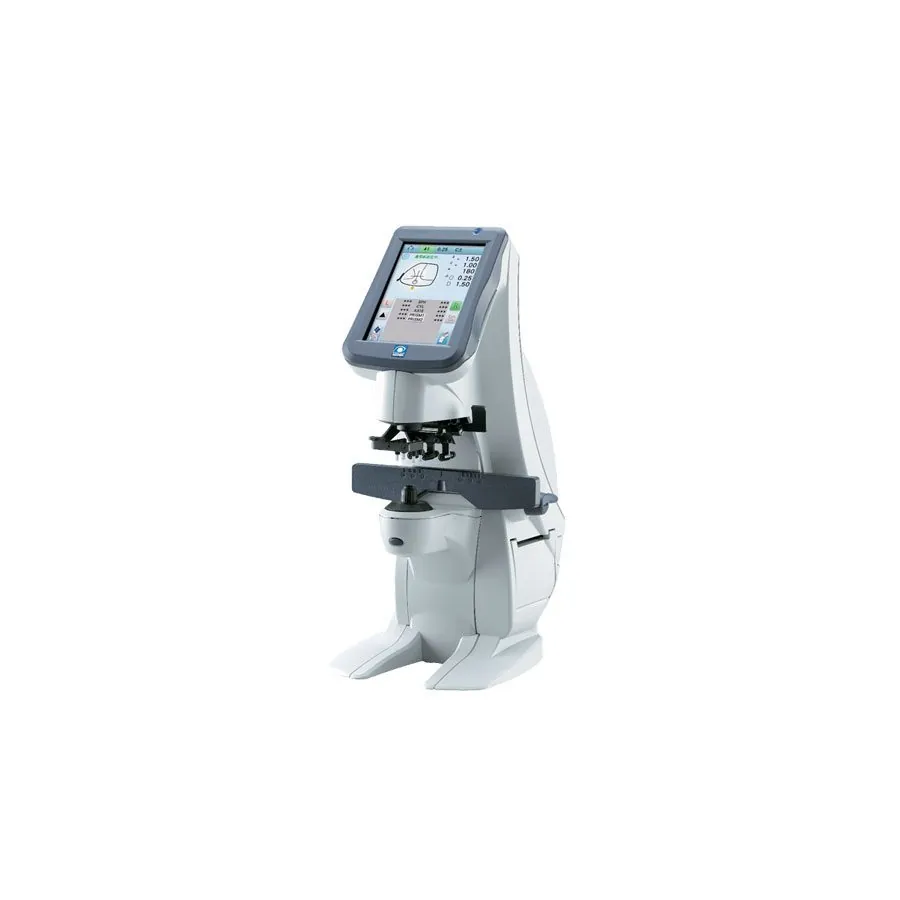
LM-7, LM-1800 & LM-101 Lensmeters
LM-7, LM-1800 and LM-101: automated and manual
Three lensmeters covering the range. The LM-7 is the top of the line, with a 108-point Hartmann sensor and a green measurement light for precision on high-index lenses. The LM-1800 uses Hartmann-Shack wavefront technology with a green sensor and covers sphere from minus 25 to plus 25 dioptres. The LM-101 is the manual instrument, and it reads hard and soft contact lenses as well as spectacles.
What it does
- LM-7: Hartmann sensor with 108 measurement points and green measurement light
- LM-7: automatic lens detection including multifocals, UV transmittance measurement
- LM-7: advanced prism Rx position layout and scale mode for PD measurement
- LM-1800: Hartmann-Shack wavefront technology with green sensor for high index lenses
- LM-1800: sphere -25D to +25D, cylinder 0D to ±10D, prism to 20Δ
- LM-1800: smart IC card and Ethernet interfaces for data transfer
- LM-101: manual, reads hard and soft contact lenses and conventional lenses
- LM-101: AC adapter or battery powered, full 90-degree inclination with prism compensator
Is it right for your practice?
Best fit
Every practice with an optical. Which model depends on volume and whether you need data flowing into records automatically.
Why consider it
The green measurement light on the LM-7 and LM-1800 is the specification to pay attention to if you dispense a lot of high-index material, which most opticals now do - standard measurement light struggles where green does not. The LM-7 adds a 108-point Hartmann sensor, automatic lens detection including multifocals and UV transmittance measurement. The LM-1800 uses Hartmann-Shack wavefront technology and covers sphere from -25D to +25D, with IC card and Ethernet interfaces that move readings into the record rather than onto a sticky note.
What to compare
The LM-101 is not a lesser version of the same thing - it is a manual instrument that reads hard and soft contact lenses, which the automated models are not primarily built for. Plenty of practices own both for that reason, and a practice that mostly needs contact lens verification should not be sold an LM-7. Between the two automated models, the LM-7's extra measurement points and lens detection matter at high dispensing volume and are hard to justify at low.
Ask me about
Your actual dispensing volume and high-index share, and whether you need the readings landing in the record automatically or a written figure is fine.
Specifications
These are the published figures for the LM 7. The other models in this family differ; ask me for the specification sheet on the one you are considering.
| Sphere (Spectacle Lenses) | -25.00 to +25.00 D |
|---|---|
| Sphere (Contact Lenses) | -25.00 to +25.00 D (BC=6.0 to 9.0) (0.01 / 0.06 / 0.12 / 0.25 D increments) |
| Cylinder | 0.00 to ±10.00 D (-, MIX, +) (0.01 / 0.06 / 0.12 / 0.25 D increments) |
| Axis | 0 to 180º (1º increments) |
| ADD | 0.00 to +10.00 D (first add, second add) (0.01 / 0.06 / 0.12 / 0.25 D increments) |
| Prism | 0.00 to 20.00Δ (0.01 / 0.06 / 0.12 / 0.25Δ increments) |
| Prism Mode | Δ, Base In / Out, Base Up / Down |
| PD measurement (Scale Mode Function) | 15 to 42.5 mm (monocular), Single vision PD, Progressive lens far vision PD |
| UV Transmittance | 0 to 100% (1 or 5% increments) with central wavelength 365 nm (UV-A) |
| Measuring time | 0.1 second ±10% (minimum) |
| Measurable Lens Diameter (Spectacles) | ø20 to 120 mm |
| Measurable Lens Diameter (Contact Lenses) | Larger than the inner diameter of the nosepiece (ø5 mm) |
| Measurable Transmittance | 10% and over (20% and over for ±15.00 to ±25.00 D) |
| Compensation function for high index lenses | The Abbe number is changeable in the range of 20 to 60. |
| Marking System | Ink cartridge type, Ink pad type (optional) |
| Wavelength / Measuring Point | 538 nm (green) / 108 within nosepiece |
| Display | 5.7-inch color full graphic TFT-LCD, 640 × 480 dots with LED backlight |
| Printer | Thermal line printer with auto cutter (paper width: 58 mm) for LM-7P |
| Interface | RS-232C, USB2.0 HOST, USB2.0 FUNC, 10 / 100 BASE-T Ethernet (optional): 1 port each, Wireless LAN (optional) |
| LM-7P Dimensions | 220 (W) x 240 (D) x 410 (H) mm / 8.7 (W) x 9.4 (D) x 16.1 (H) |
| LM-7P Mass | 4.0 kg / 8.8 lbs. |
| LM-7 Dimensions | 220 (W) x 240 (D) x 410 (H) mm / 8.7 (W) x 9.4 (D) x 16.1 (H) “ |
| LM-7 Mass | 3.7 kg / 8.2 lbs. |
| Standard Accessories LM-7P | Power cord, Dust cover, Nosepiece for contact lenses, Measuring Progressive Power Lenses explanation guide, Printer paper |
| Standard Accessories LM-7 | Power cord, Dust cover, Nosepiece for contact lenses, Measuring Progressive Power Lenses explanation guide |
| Optional Accessories | Ink cartridge (red, blue), Ink pad type marking unit, Ink pad (red, blue), RS-232C communication cable (OPIF-6), USB communication cable (equipped with the dedicated USB driver), LAN board, LAN communication cable, WLAN module, Foot switch, Barcode scanner, Magnetic card reader, Eye Care card |
Also in Pretest & Autorefraction
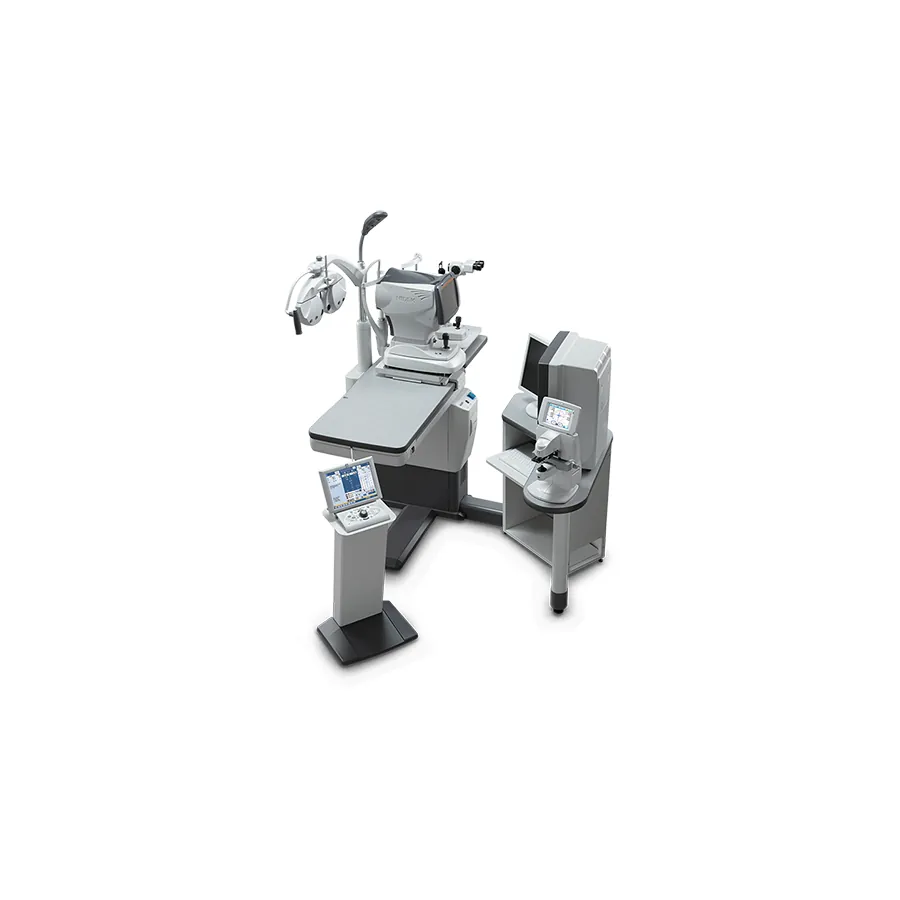
EPIC-6100 Refraction Workstation
Digital refractor, acuity chart, autorefractor/keratometer, OPD and auto lensmeter combined into a 5 by 6 foot workstation, so the patient never moves between devices.
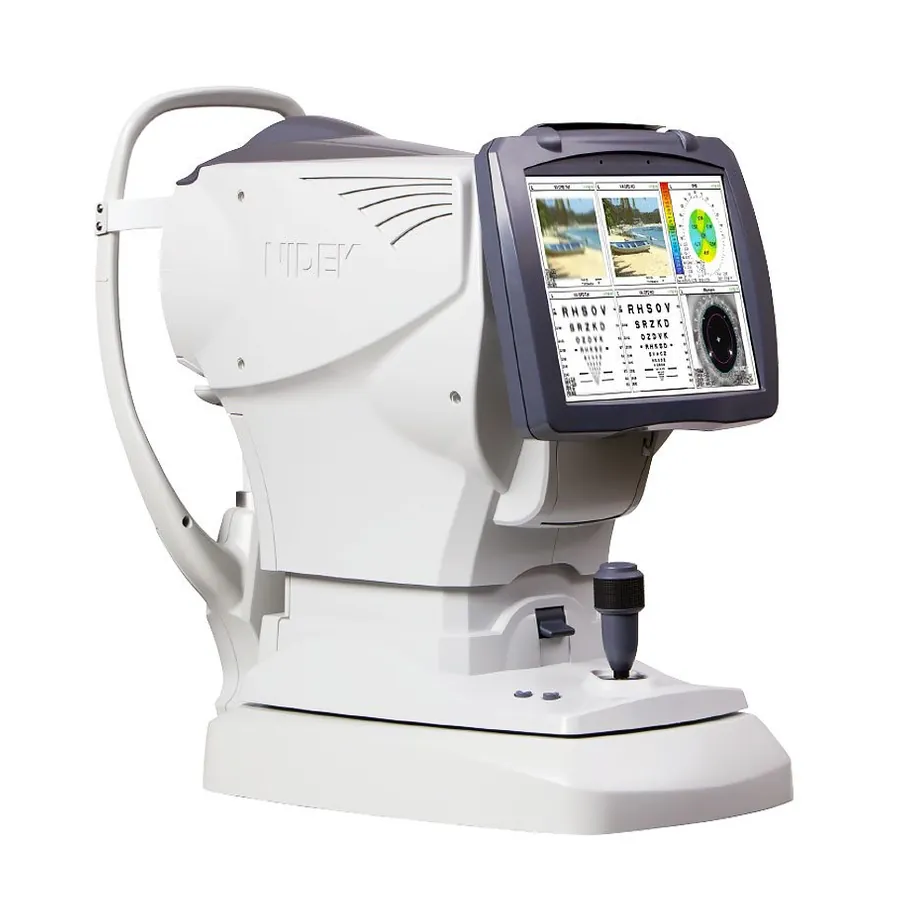
OPD-Scan III Wavefront Aberrometer
Autorefractor, keratometer, pupillometer, corneal topographer and wavefront aberrometer in one instrument, capturing over 20 diagnostic measurements in roughly ten seconds per eye.
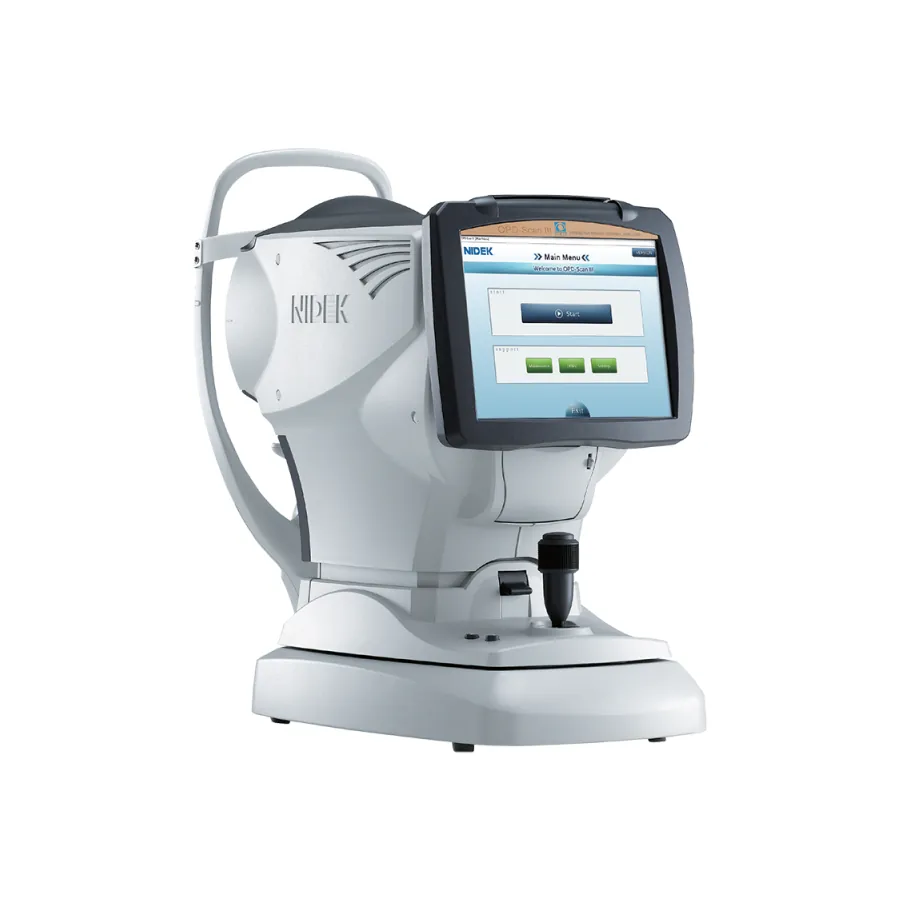
OPD-Scan III Visual System
The OPD-Scan III with a tablet-based reporting viewer built for explaining results to the patient in the room.
Specifications reviewed: 2026-09-06
Manufacturer source:
Marco: LM-7, LM-1800 & LM-101 Lensmeters.
Configurations and specifications change. Ask me to confirm before ordering.
Talk it through with me
Tell me how your practice handles this now and what you want it to do, and we can work through the options together. You do not need to have settled on a product first.