
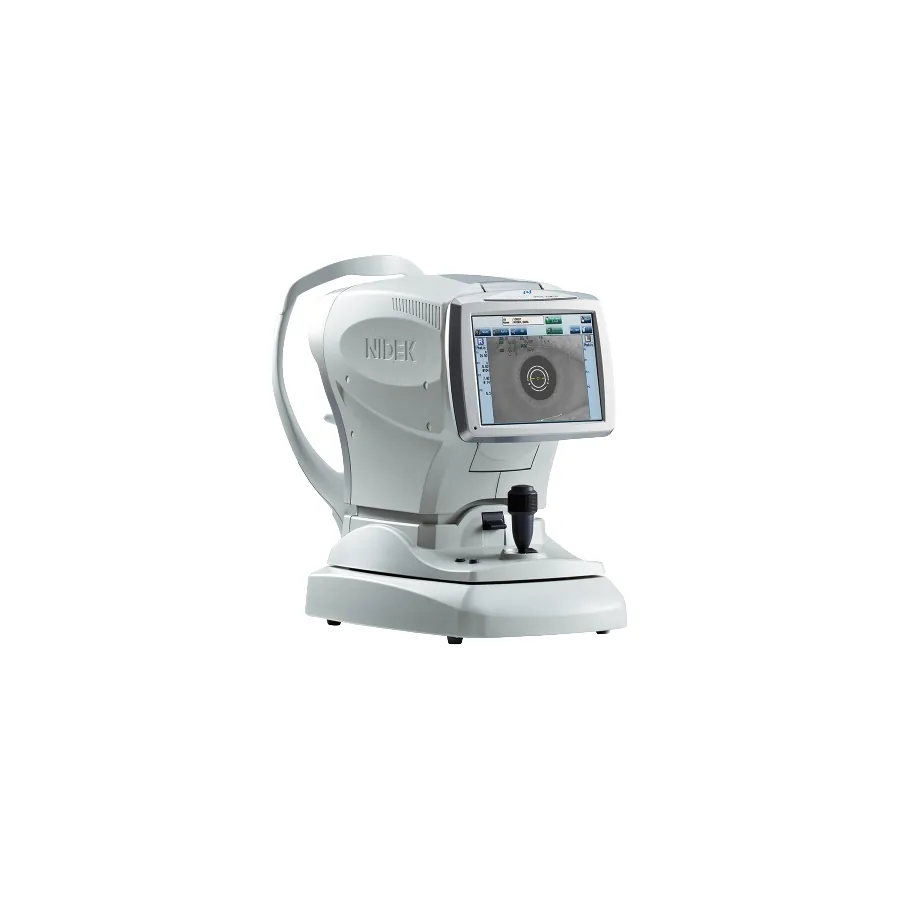
AL-Scan Optical Biometer
Axial length for myopia management, fast enough for children
The AL-Scan is an optical biometer built with myopia management in mind. Three-dimensional auto tracking and auto capture measure axial length, keratometry and pupil size without a lot of cooperation from the patient, which is what makes it workable with young children. It plots axial length on a growth curve over time against age-matched population data, so the conversation with parents is a chart, not an assertion.
What it does
- Quick, accurate axial length measurement suited to young children
- 3D auto tracking and auto capture for axial length, keratometry and pupil size
- Growth curve plotting axial length measurements over time
- Age-matched population comparison
- Expected progression display to support treatment discussions
Is it right for your practice?
Best fit
Practices running or starting a myopia management program, and pediatric-heavy practices generally.
Why consider it
Myopia management is a conversation with parents about a number they cannot see. The AL-Scan plots axial length on a growth curve over time against age-matched population data, which turns that into something you can point at, which makes for a much clearer conversation about whether treatment is working and whether to keep going. Three-dimensional auto tracking and auto capture mean the measurement does not depend on a seven-year-old holding still on command, which is the difference between a biometer that gets used on children and one that does not.
What to compare
This is a program instrument, not a general pre-test one. If you are not actually running myopia management - no treatment options offered, no recall structure for repeat measurement - the growth curve has nothing to plot and the budget is better spent elsewhere in the lane. Buy it when the program exists or is committed to, not to start one. For cataract and IOL biometry the comparison is a different class of instrument entirely.
Ask me about
What the rest of a myopia management program needs alongside it, and how practices in my territory have structured the repeat-measurement recall.
Specifications
| Axial length | – |
|---|---|
| Measurement range (Technical Details) | 14 to 40 mm |
| Display increments (Technical Details) | 0.01 mm |
| Measurement accuracy (Technical Details) | ±0.05 mm |
| Measurement method | Low-coherence interferometry (LCI) |
| Corneal curvature radius | – |
| Pupil size | – |
| Auto tracking | X-Y-Z directions |
| Auto shot | Available |
| Display (Technical Details) | Tiltable 8.4-inch color LCD touch screen |
| Printer | Thermal line printer with automatic paper cutter |
| Interface | LAN, USB |
| Power Supply | 100 to 240 V AC, 50/60 Hz |
| Power Consumption | 100 VA |
| Measurements | 283 (W) x 504 (D) x 457 (H) mm / 11.1 (W) x 19.8 (D) x 18.0 (H)” |
| Mass | 21 kg / 46 lbs. |
| Operating system | Windows 10 Pro 1607 or later (64 bit), Windows 11 Pro Windows Server 2016 Standard (64 bit), Windows Server 2019 Standard (64 bit), Windows Server 2022 (64 bit) |
| Display (Myopia Viewer MV-1) | 1,280 x 768 or higher |
| Connectable devices that transmit refraction data and BCVA | TONOREF II, ARK-1s, ARK-1a, ARK-1, ARK-F, AR-1s, AR-1a, AR-1, AR-F, ARK-560A, ARK-530A, ARK-510A, AR-360A, AR-330A, AR-310A, HandyRef-K, HandyRef |
Also in Pretest & Autorefraction
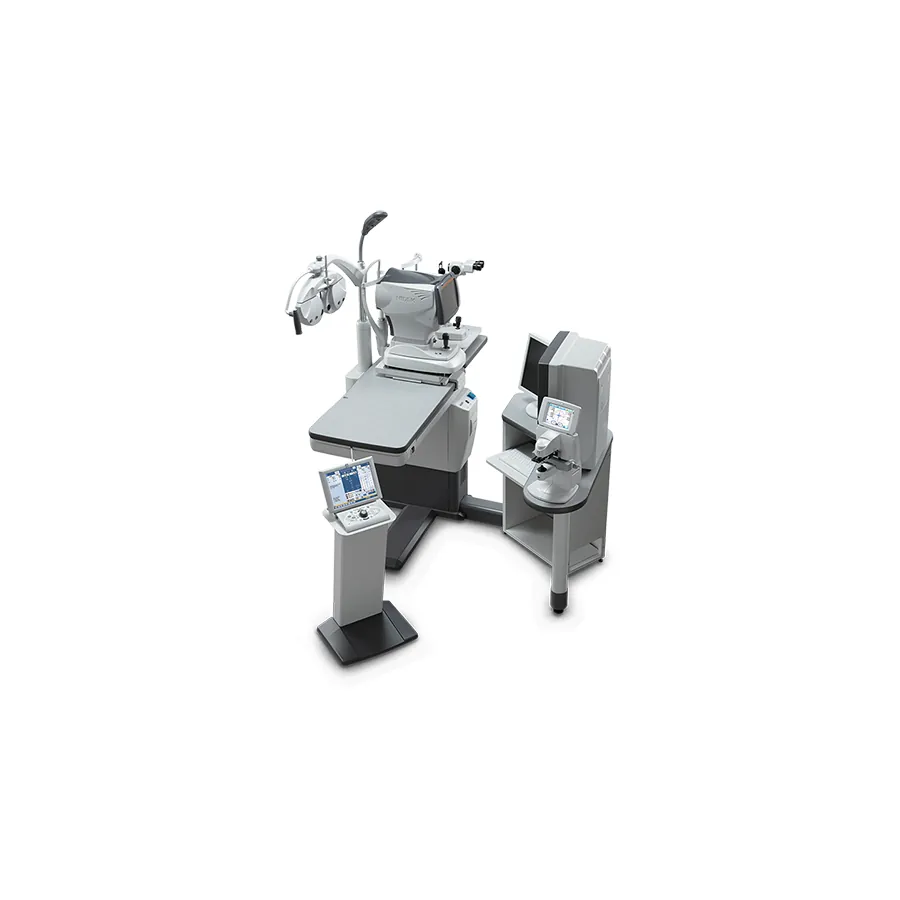
EPIC-6100 Refraction Workstation
Digital refractor, acuity chart, autorefractor/keratometer, OPD and auto lensmeter combined into a 5 by 6 foot workstation, so the patient never moves between devices.
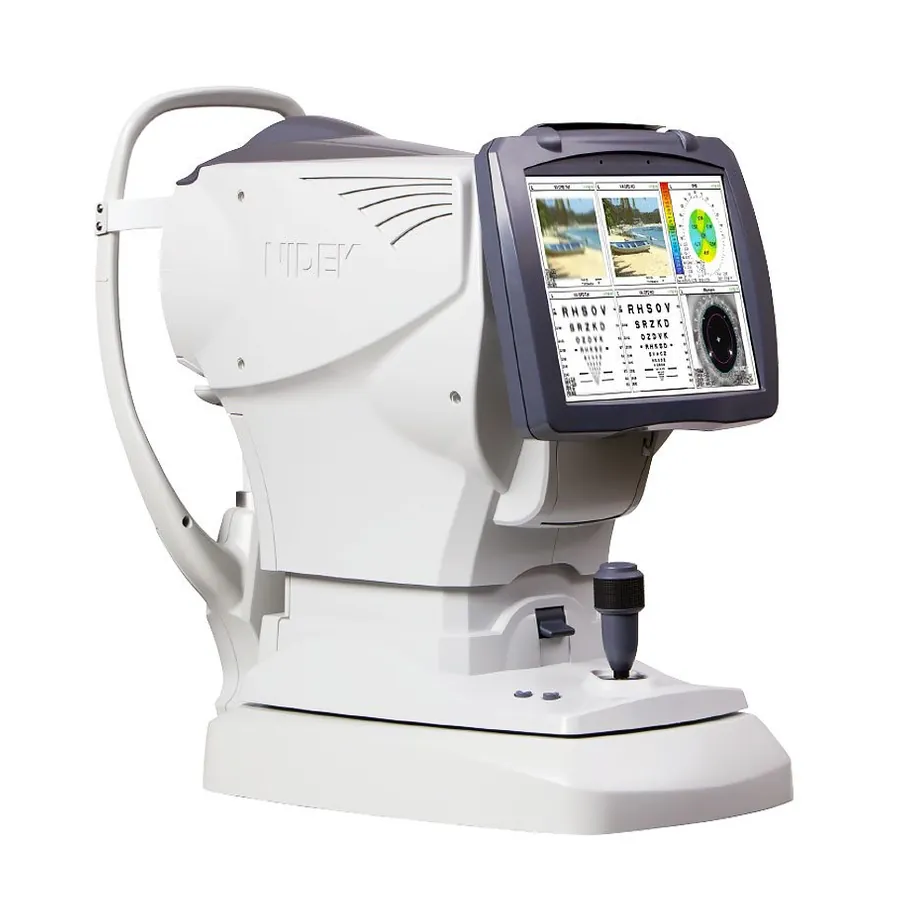
OPD-Scan III Wavefront Aberrometer
Autorefractor, keratometer, pupillometer, corneal topographer and wavefront aberrometer in one instrument, capturing over 20 diagnostic measurements in roughly ten seconds per eye.
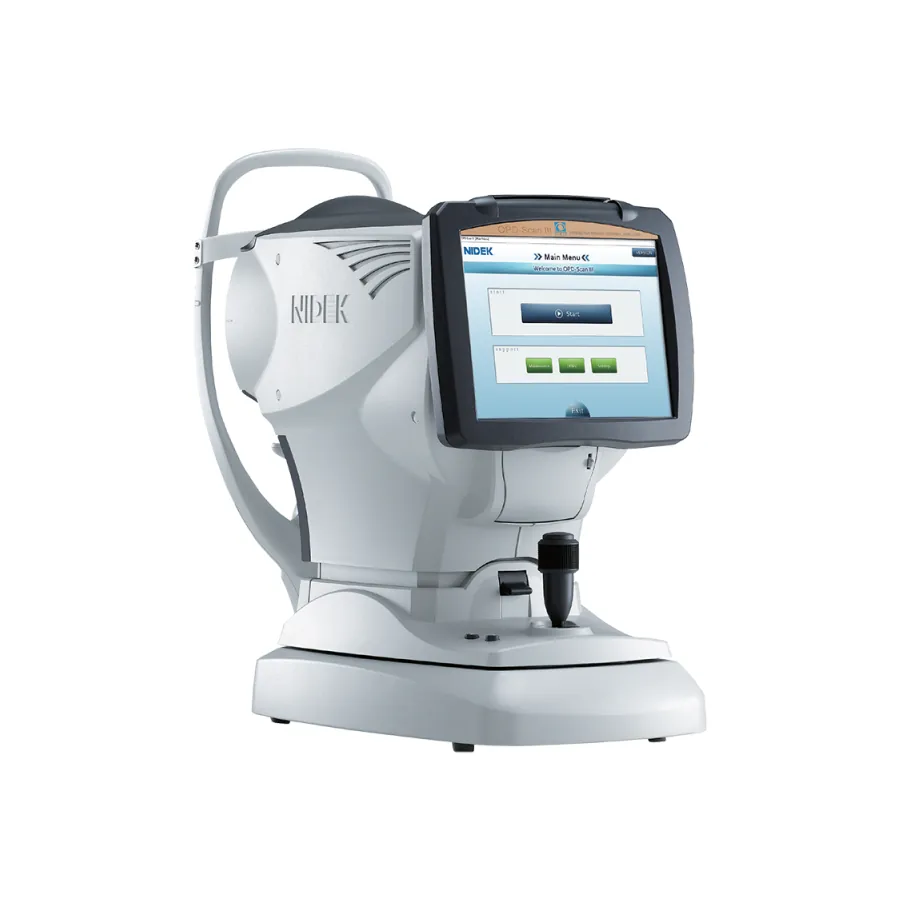
OPD-Scan III Visual System
The OPD-Scan III with a tablet-based reporting viewer built for explaining results to the patient in the room.
Specifications reviewed: 2026-09-06
Manufacturer source:
Marco: AL-Scan Optical Biometer.
Configurations and specifications change. Ask me to confirm before ordering.
Talk it through with me
Tell me how your practice handles this now and what you want it to do, and we can work through the options together. You do not need to have settled on a product first.