
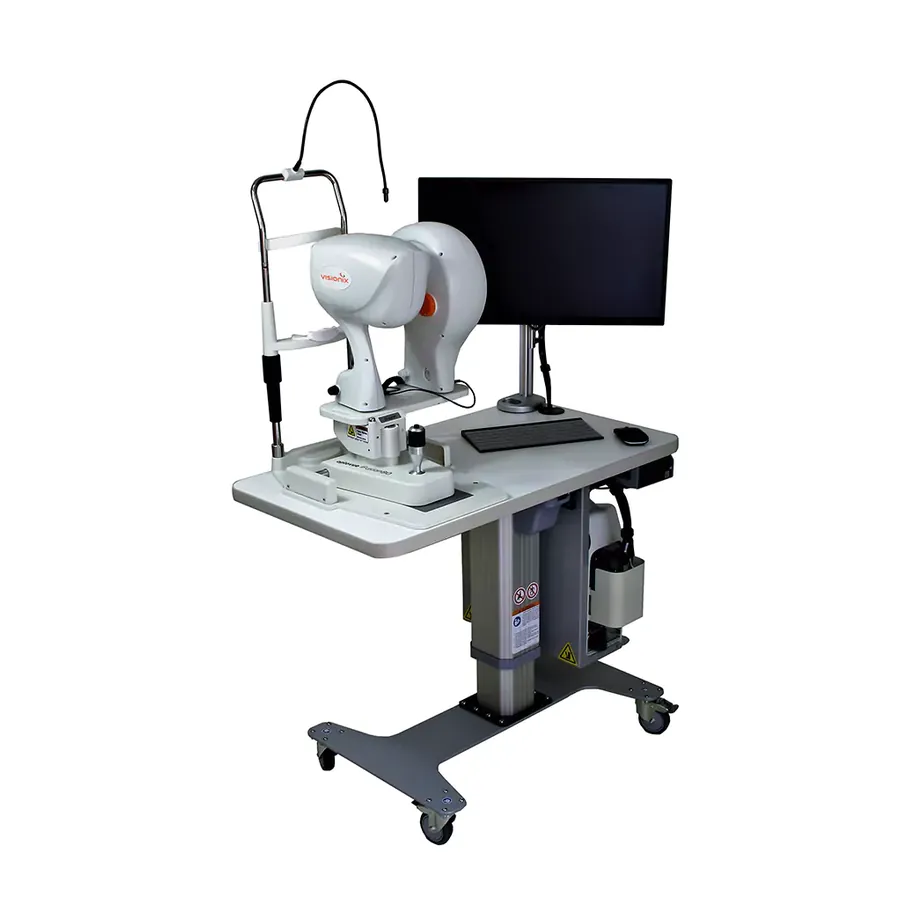
Optovue iFusion 80
The iFusion 80 puts the iVue 80 OCT and the iCam 12 retinal camera in one instrument - 80,000 A-scans per second alongside 12-megapixel 45-degree color and red-free imaging. The practical difference from owning both separately is one patient positioning, one software platform and one capital purchase, with OCT data overlaid on the fundus photograph for clinical correlation. It suits practices that want both OCT and fundus documentation and do not have the lane space or the budget for two instruments.
What it does
- 80,000 A-scans per second at 5.0 µm axial and 15 µm transverse resolution
- OCT and a 12-megapixel non-mydriatic iCam 12 fundus camera in one platform
- 12 × 9 mm en face retinal view with 3D retinal imaging
- Retinal mapping with normative comparison and change analysis
- Pachymetry and epithelial thickness mapping
- Anterior segment angle measurement and reporting
- iWellness screening exam
- Non-mydriatic through pupils as small as 2.5 mm
Is it right for your practice?
Best fit
General and medical optometry practices that need both OCT diagnostics and fundus photography but want one instrument, one footprint and one purchase.
Why consider it
The iVue 80's OCT engine and a 12-megapixel non-mydriatic iCam12 fundus camera in one platform, with iVue OCT images overlaying directly onto the fundus photograph. The camera offers 45° color and red-free imaging, a three-color display with an emboss view, and external color photography of the ocular surface. Non-mydriatic through a 2.5 mm pupil.
What to compare
There are three ways to arrive here and only one of them is a different instrument. If you already own a fundus camera you are happy with, the iVue 80 alone gives you the same OCT and nothing you do not need. If you want the camera eventually but not this year, buy the iVue 80 and add the iCam 12 later - Visionix sells the camera as an addition and the combination is what the iFusion is. And if you want both now, this is that, in one footprint and one purchase. What the combined unit buys you is room space and a single positioning of the patient, not image quality a separate camera could not match.
Ask me about
Whether to take the camera now or add it later, what the footprint saving is worth against your actual room, and what an independent OCT plus a separate camera would cost you in the same lane.
Specifications
| OCT Technology | Spectral Domain OCT (~840 nm) |
|---|---|
| OCT Scan Speed | 80,000 A-scans/second |
| Camera Resolution | 12 megapixels |
| Retina Scan | 12 × 9 mm en face |
| iWellness Scan | Included (distinctive) |
| Min. Pupil Size | ≥2.5 mm |
| Connectivity | DICOM compatible |
| OCT Axial Resolution | 5.0 µm (in tissue) |
| OCT Transverse Resolution | 15 µm (retina) |
| Pachymetry | 6 mm |
| Fundus Camera | iCam 12, non-mydriatic, 12 megapixels |
| Monitor Resolution | 1920 × 1080 at 32-bit |
| Table Dimensions | 19.1" W × 34.4" L × 263–343 mm H |
| Fundus Field of View | 45° (iCam12) |
| Fundus Imaging Modes | Color and red-free; external color photography of the ocular surface |
| Fundus Display | Three-color display with emboss view |
| OCT Overlay | iVue OCT images overlay onto the fundus photograph |
Worth comparing
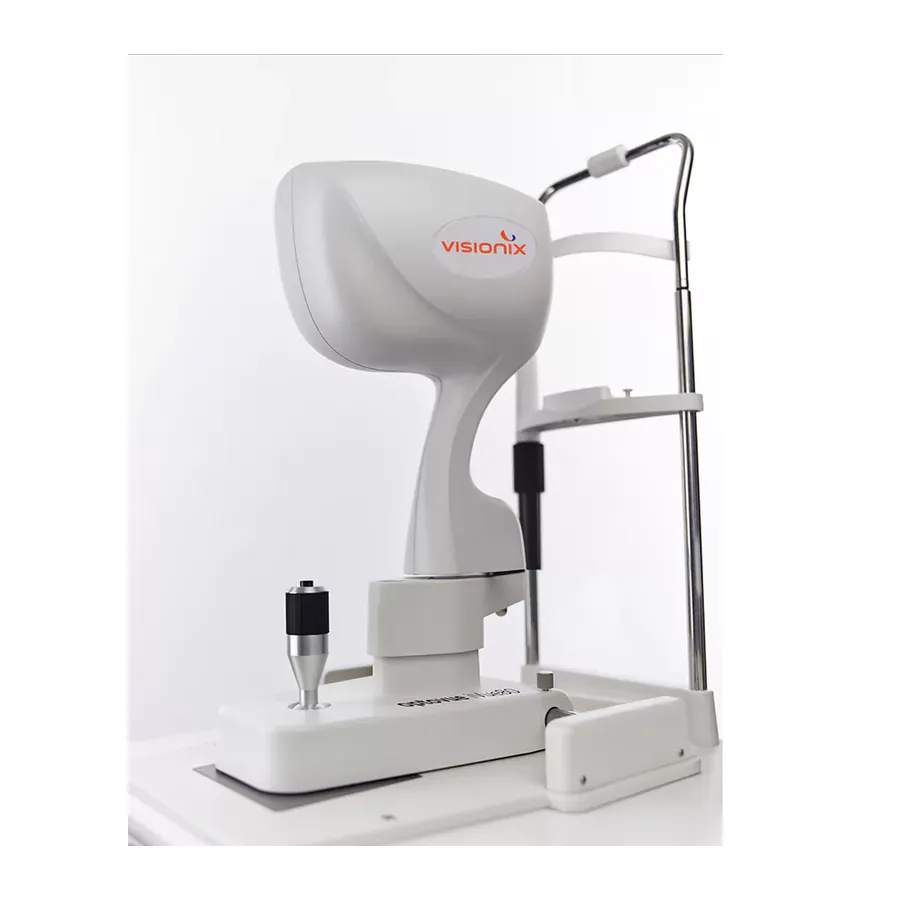
Optovue iVue 80
The compact end of Optovue's OCT range: 80,000 A-scans per second, real-time en-face imaging and iWellness, in a footprint that fits an existing lane.
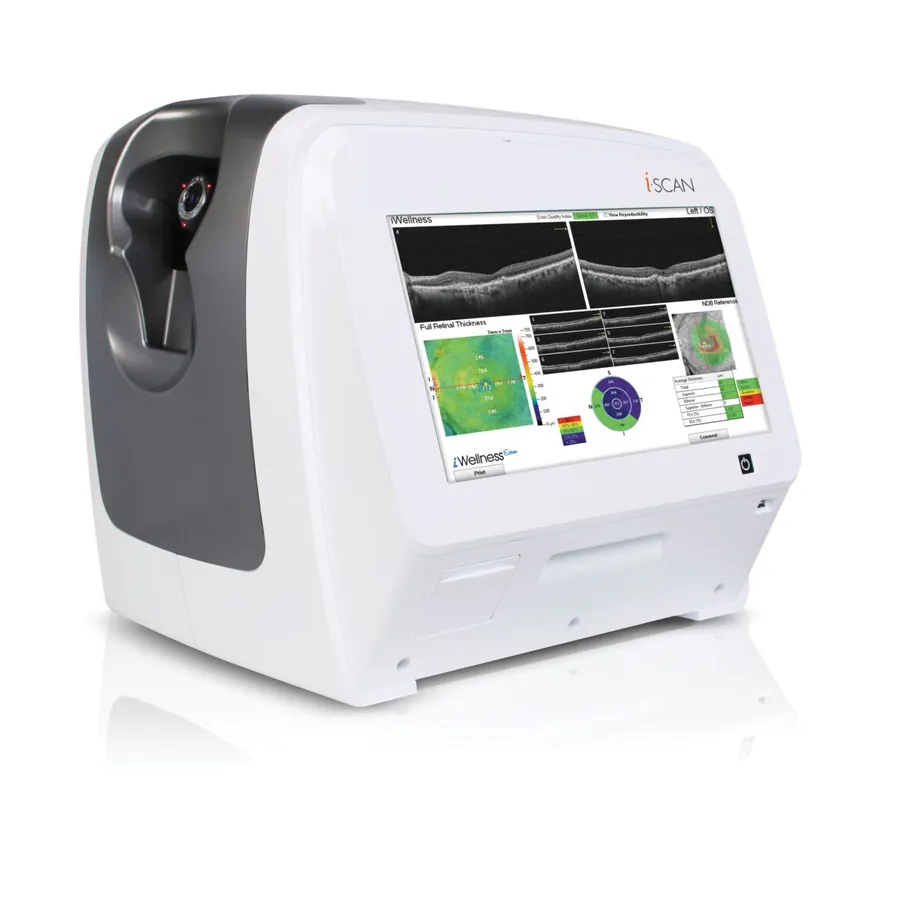
Optovue iScan 80
The OCT that runs itself: automatic alignment and signal optimization, with patient guidance in twelve languages, at 80,000 A-scans per second.
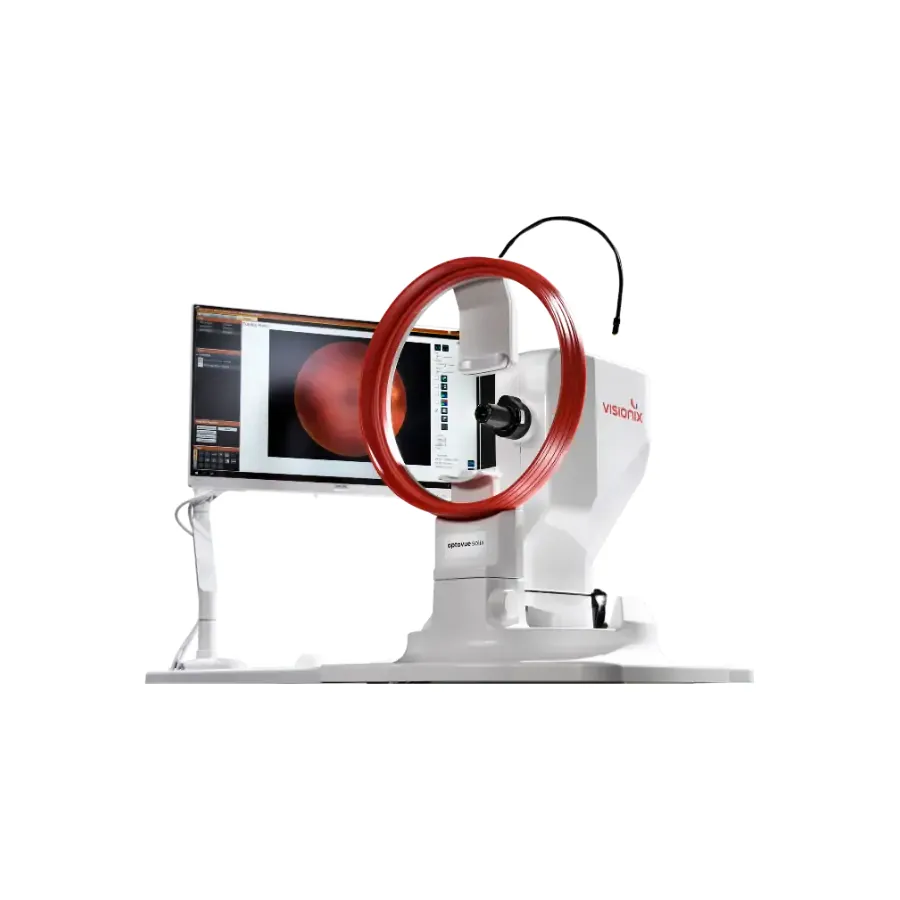
Optovue Solix OCT/OCT-A
The top of Optovue's OCT line: 120,000 A-scans per second with FullRange imaging for anterior chamber work alongside retina and glaucoma scanning.
Specifications reviewed: 2026-09-05
Manufacturer source:
Optovue and Visionix: Optovue iFusion 80.
Configurations and specifications change. Ask me to confirm before ordering.
Talk it through with me
Tell me how your practice handles this now and what you want it to do, and we can work through the options together. You do not need to have settled on a product first.